
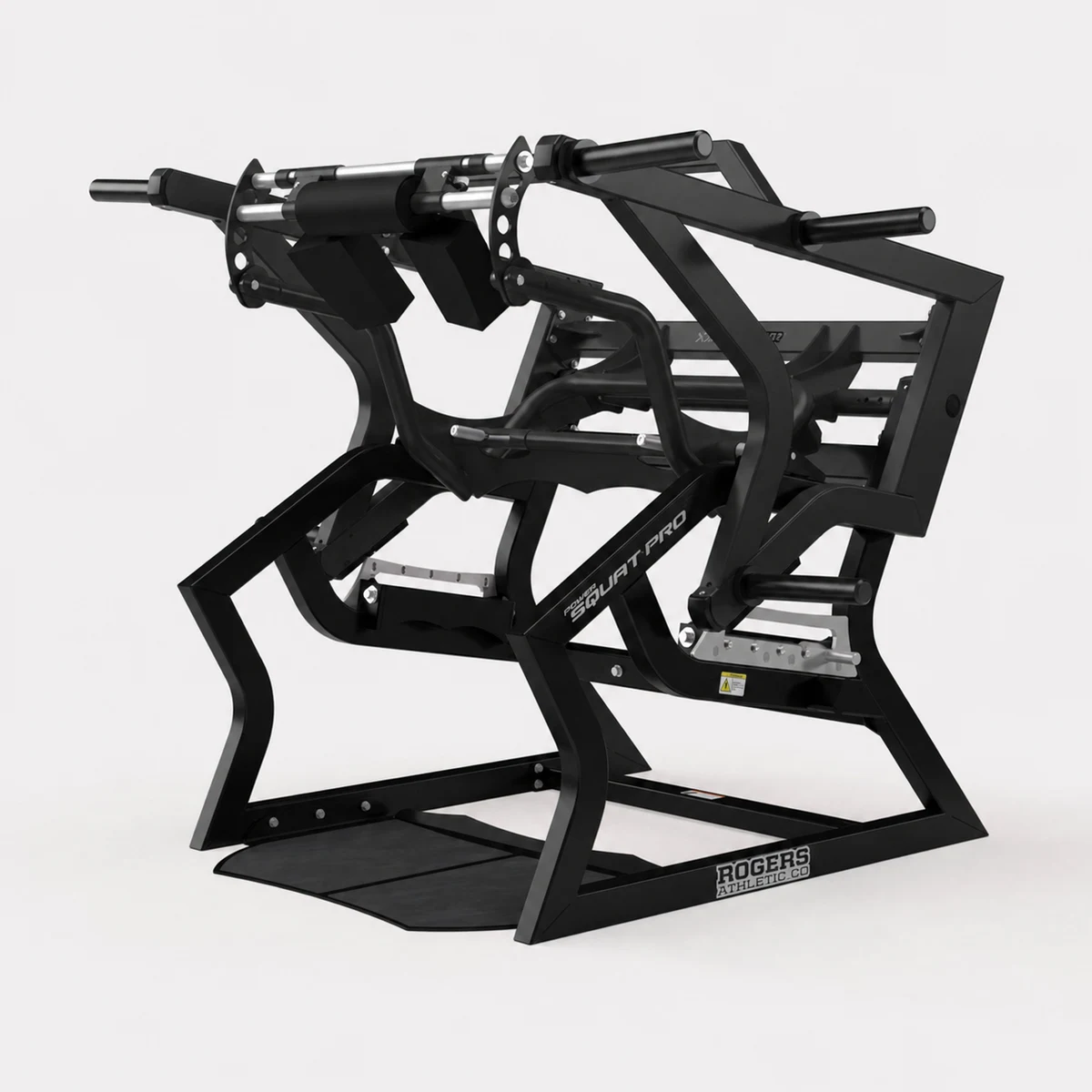
Power Squat
Rogers Athletic • Power Squat Pro XT
One squat platform. Three completely different strength curves. Moving the plates between the three loading horns changes where the exercise feels hardest during the repetition.
Video Guide
Watch how to set up and use this equipment.
Watch directly on YouTube ↗Choose Your Loading Position
The plate position changes the machine's leverage—not just how heavy it feels. Use these three settings to change where resistance is emphasized throughout the squat.
XT Top Horn
Most comparable to a traditional squat. Resistance stays high from the bottom through the finish.
Middle Horn
More resistance in the deep position, followed by slightly less resistance as you stand. This creates a bottom-loaded strength curve.
Low Horn
Easier out of the bottom and considerably harder near the top—similar to the accommodating resistance created by adding chains to a barbell.
Resistance figures are Rogers Athletic estimates for a 6-foot athlete using 400 lb of plates. Actual resistance and feel vary based on the athlete's size and machine setup.
Why the Floating Yoke Matters
Unlike a fixed shoulder carriage, the patented floating yoke follows the athlete's movement and adjusts for different body sizes. This helps keep the exercise centered on the legs and hips while providing a supported, repeatable squat path.
- Floating yoke — Moves with the athlete and accommodates different body sizes.
- Adjustable setup — Shoulder-pad position and starting height can be adjusted for a secure fit.
- Range limiter — Controls squat depth and includes a welded backup stop.
Muscles Trained
Quick Setup
- 1Adjust the shoulder pads and starting height.
- 2Select a comfortable range limit.
- 3Load the same horn with the same plate weight on both sides.
- 4Center your shoulders beneath the pads.
- 5Brace, unlock the handles, and squat with control.
Heavy-duty capacity: Accepts more than 1,500 lb of plates.